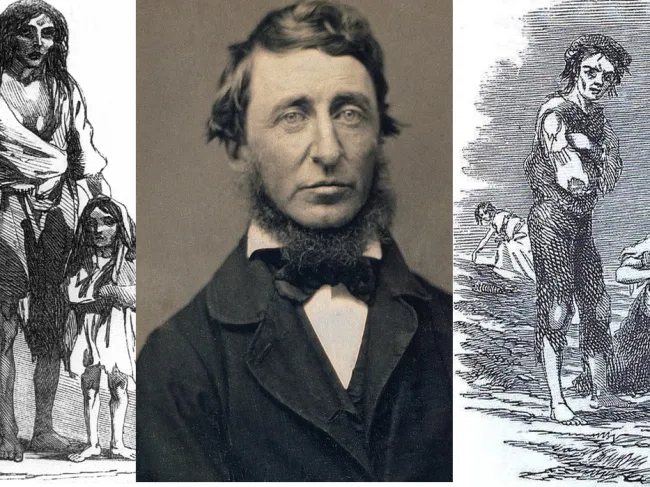
 Henry David Thoreau was one of America’s most eloquent and incisive philosophers. His derision of unjust laws in his essay on “Civil Disobedience” is still catnip 175 years later. His summons to individuals to march to the beat of their own drum is a message that will continue to resonate as long as drums and dissonance exist. Thoreau vividly debunked the folly of people squandering their lives stockpiling unnecessary possessions.
But in his final years, Thoreau mutated into an apologist for bloodthirsty fanaticism and helped foment the American Civil War. Thoreau’s derision of prosperity and of freedom of contract continue to animate anti-capitalist zealots in our time. When Thoreau presumed he was rising above mere economic considerations, he was paving the road to serfdom.
Thoreau’s best-known work is Walden—his chronicle of living by a Massachusetts pond for a couple years. In the book’s peak piety passage, Thoreau declared, “None can be an impartial or wise observer of human life but from the vantage ground of what we should call voluntary poverty.” But Thoreau’s poverty was a kabuki performance. His cabin was a mere 20 minutes away from his mother’s dinner table, where he often took repast.
Read More




 The walking cadavor named George Soros is in the process of buying a 40% interest of Audacy which owns 235 radio stations in 48 media markets across the US. From